

On Ambiguous Loss
Documenting absence, connection, and the spaces in-between.

I have a tradition of setting our lives to music: home videos for birthdays and summer vacations, each with its own song. Our kids are now old enough to choose their own music—most recently from the Dog Man soundtrack (not my personal selection, despite what Spotify’s Discovery Weekly thinks). At the very bottom of my Vimeo account, the oldest video waits quietly—our wedding, with only fifty-four views, most likely from us revisiting it over the years with our children. Yet even in its silence, it vibrates with absence.
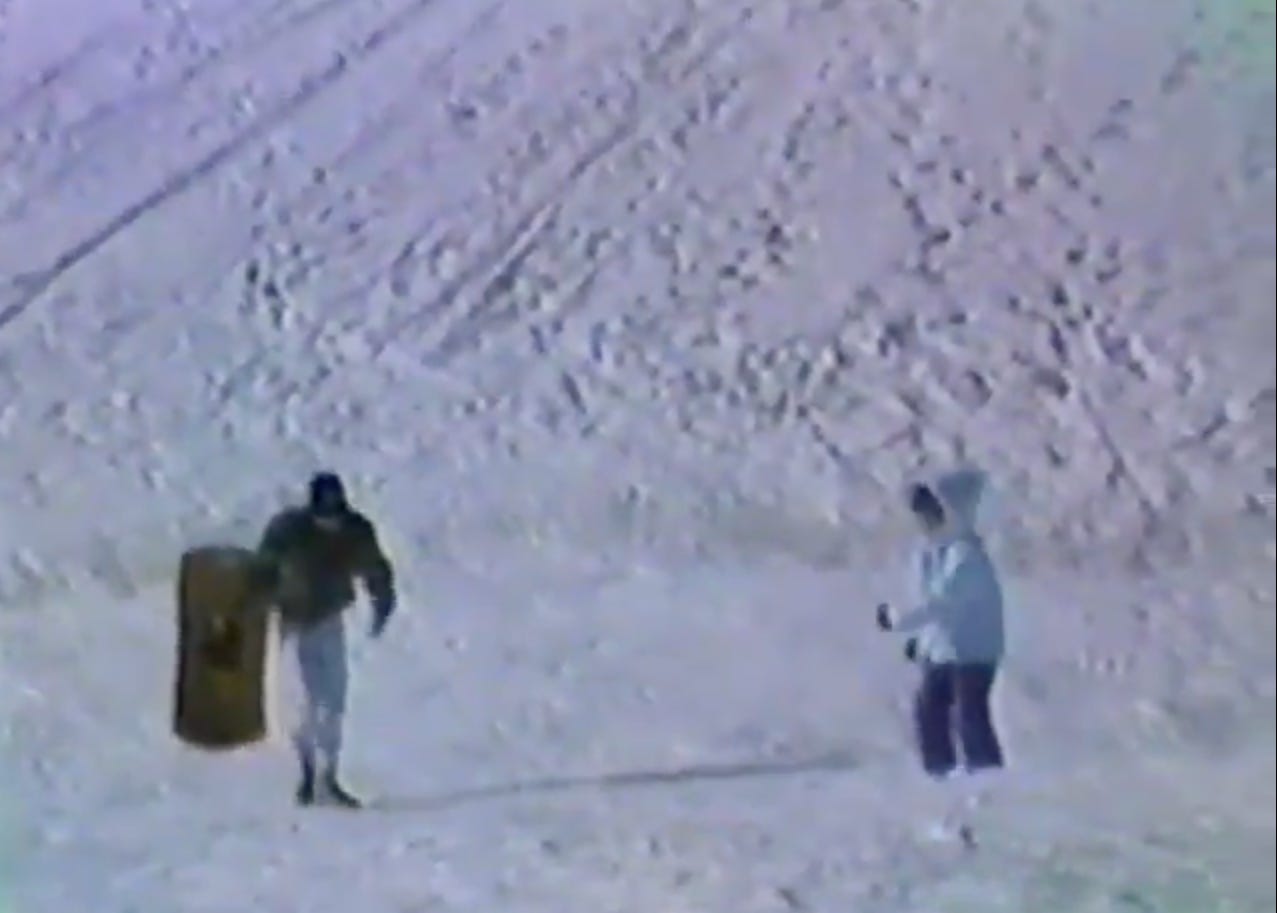
My love for home movies began with him. What started as our father dragging a barely portable VHS recorder everywhere—annoying at first—evolved into an art form as my brother and I grew together. Nine years younger, I delighted in rewatching our adventures. Elbowing each other, laughing at our frozen selves—sledding down hills, sliding over bumps in the snow using our pants as sleds. Often I was his model, toting an Ouija board or whatever felt “cool” in the moment.
When he went off to college, I’d sit in his carpeted closet, noticing how the air seemed to escape the space. Poring over prints pressed between the pages of Vonnegut, I absorbed the strange, liminal nature of his worlds–the way joy and absurdity collided–and carried that into my own performances. When my high school drama club asked us to perform a monologue, I memorized Act One, Scene Four of Vonnegut’s HAPPY BIRTHDAY, WANDA JUNE:
(Music indicates happiness, innocence, and weightlessness. Spotlight on WANDA JUNE, an eight-year-old in a starched party dress. She is as cute as Shirley Temple.)
WANDA JUNE: “Hello. I am Wanda June. Today was going to be my birthday, but I was hit by an ice-cream truck before I could have my party. I am dead now. I am in Heaven. That is why my parents did not pick up the cake at the bakery. I am not mad at the ice-cream truck driver, even though he was drunk when he hit me. It didn’t hurt much. It wasn’t even as bad as the sting of a bumblebee. I am really happy here! It’s so much fun. I am glad the driver was drunk. If he hadn’t been, I might not have got to Heaven for years and years. I would have had to go to high school first, and then beauty college. I would have had to get married and have babies and everything. Now I can just play and play and play. Any time I want any pink cotton candy I can have some. Everybody up here is happy–the animals and the dead soldiers and the people who went to the electric chair and everything. They’re all glad for whatever sent them here. Nobody is mad. We’re all too busy playing shuffleboard. So if you think of killing somebody, don’t worry about it. Just go ahead and do it. Whoever you do it to should kiss you for doing it. The soldiers up here just love the shrapnel and the tanks and the bayonets and the dum dums that let them play shuffleboard all the time–and drink beer.”
(Spotlight begins to dim and carnival music on a steam calliope begins to intrude, until, at the end of the speech, Wanda June is drowned out and the stage is black.)
WANDA JUNE: “We have merry-go-rounds that don’t cost anything to ride on. We have Ferris wheels. We have Little League and girls’ basketball. There’s a drum and bugle corps anybody can join. For people who like golf, there is a par-three golf course and a driving range, with never any waiting. If you just want to sit and loaf, why that’s all right, too. Gourmet specialties are cooked to your order and served at any time of night or day...”
(Sudden silence)
Yesterday, on my 13th wedding anniversary—and my brother’s fiftieth birthday—I watched the wedding video again. “You Can Have It All” by Yo La Tengo begins with a soft, hesitant series of “bum ba bum bum” vocalizations, as if the song itself is holding its breath, waiting.
He was there at the start, clutching the unsteady camera, framing our lives. I don’t see him in the shots, but I feel him in the spaces between—every trembling frame, every burst of light from laughter. The DSLR shakes as I run inside mid-processional to fetch my forgotten bouquet, the warm glow of the lamps we thrifted decorating the farm tables, his unused vintage chair waits patiently, and the yellow tissue paper streamers wave in the wind like a hand from our dogwood. Even in absence, he leaves traces. The music carries the heaviness of a now complicated presence.


The footage follows me with familiarity: my partner’s hand reaching for mine as we cross the lawn, a knowing glance at the lens while escaping an embarrassing moment with our father. These fragments, once fleeting, are now weighted—they carry joy and the void left by someone who was once there.
Estrangement has turned him into a shadow: present, yet untouchable. He is absent not because of death, but because of *intolerance—a grief with no ceremony, no candle, no altar. *I am intentionally avoiding using a word ending in -phobia to describe this form of oppression against queer people.
In “I’m a Fat Activist. I Don’t Use the Word Fatphobia. Here’s Why,” Aubrey Gordon writes:
“Fatphobia denotes a fear of fat people, but as the most proudly anti-fat people will tell you readily, they aren’t afraid of us. They just hate us. Calling it a ‘fear’ legitimates anti-fat bias, lending credence and justification to the actions of those who reject, pathologize, and mock fat people, often without facing consequences for those actions.”
Regardless of terminology, the grief of absence remains.
Watching our children rewind scenes and laugh mirrors the work I do as a wedding photographer: noticing the unnoticed pockets of time, the gestures that make us human, and attending to the absences that linger—marriers building memorials for loved ones who have passed, queer clients weaving chosen family into ceremonies, empty chairs along the aisle. Some losses remain unmarked: estrangement, dementia, fractured connections. Pauline Boss, PhD, calls this “ambiguous loss,” a term describing grief that lacks clear resolution or closure, leaving individuals with prolonged, unresolved sorrow.
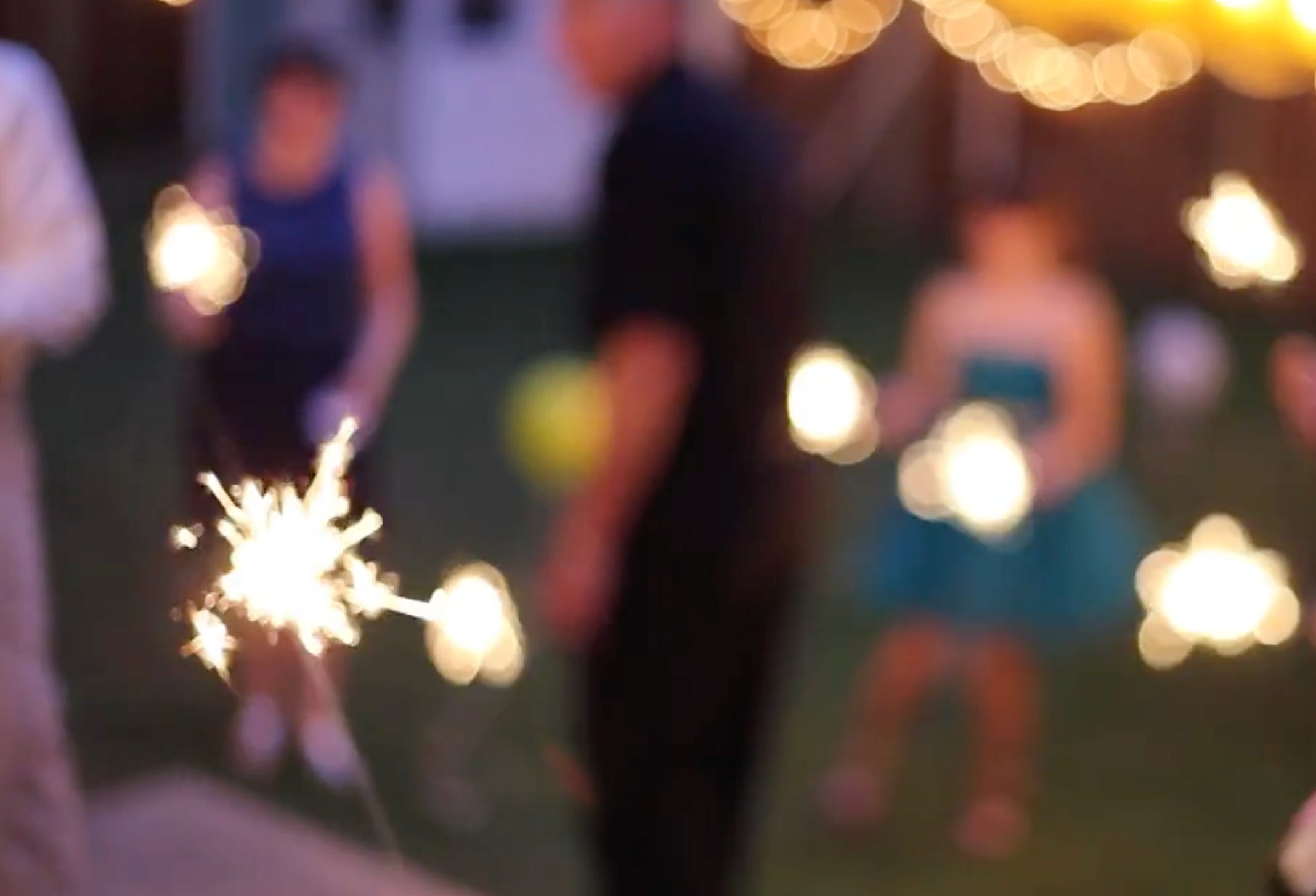
I feel it most in quiet moments, alone in my editing cave, pausing, framing a moment, holding it—while acknowledging both presence and absence. A swirly bokeh of sparklers, a shadow across the grass, the slight wobble of a camera: all reminders of those who shaped our lives and those who slipped quietly—or not so quietly—out of them.
Through these practices, I find grace in ambiguity: an acceptance that some grief has no ceremony, some loss no funeral. By setting our lives to music, pausing, framing, and holding each moment, I carve out recognition for the unrecognized—a quiet tribute to love, memory, and the shadows that linger just beyond the frame, humming softly, like a song we can play over and over.